

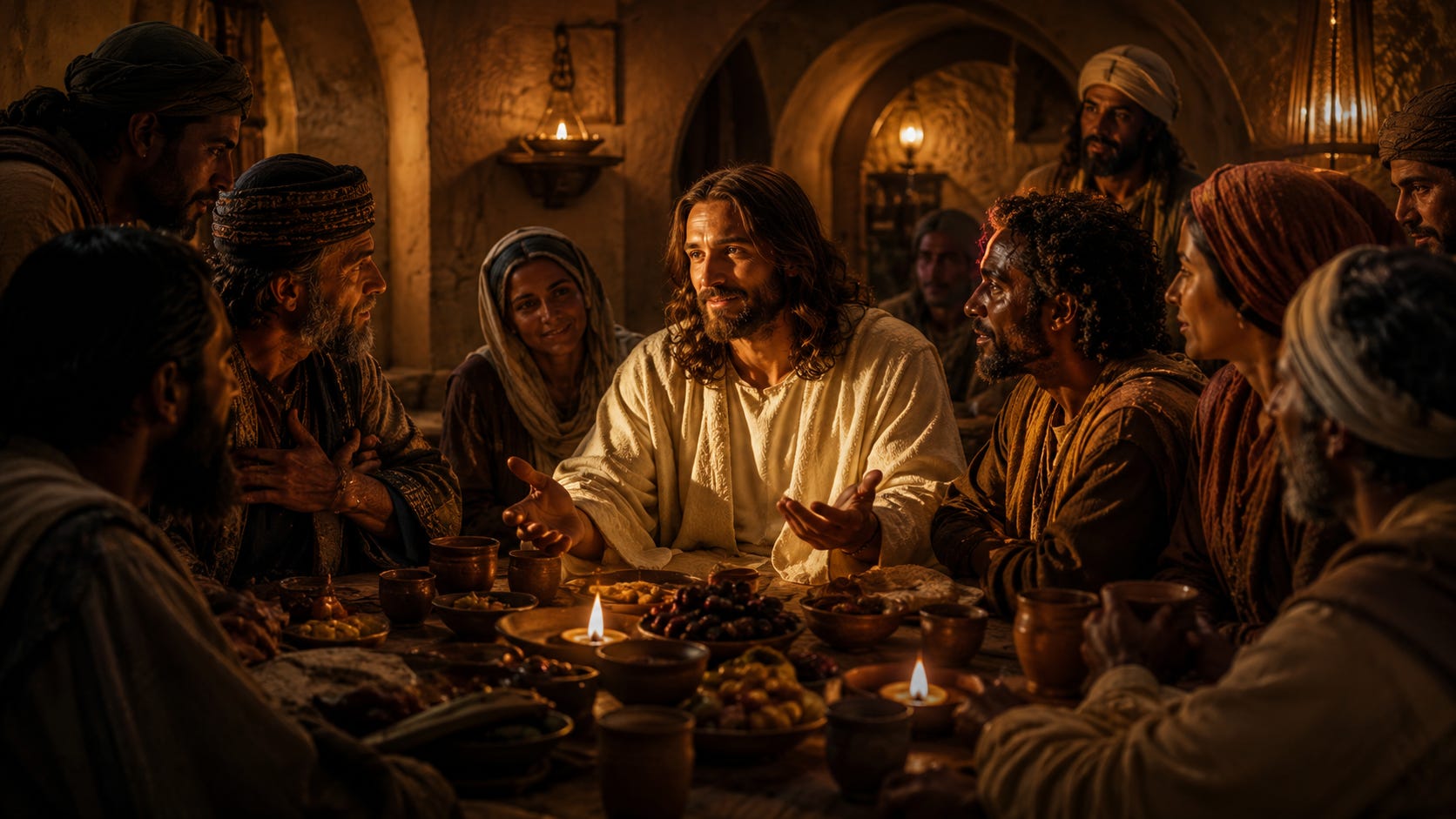
Matthew Chapter 9 is one of the most theologically dense chapters in the entire Gospel. In it, Jesus heals a paralytic, calls a tax collector to discipleship, raises a dead girl, restores sight to two blind men, and casts out a demon. He does all of this while fielding accusations of blasphemy and fielding questions about fasting. But underneath every miracle, every controversy, and every calling, a single question is being pressed into the reader’s heart: Who is this man who forgives sins? That question is not just historical. It lands on you today, in whatever paralysis you are carrying into this chapter.
Scripture Anchor
“Take heart, my son; your sins are forgiven.” (Matthew 9:2)
A — Ask
Before we can receive what this chapter is offering, we need to sit with the questions it provokes. Not rhetorical ones. Real ones.
The first is textual: Why does Jesus forgive the paralytic’s sins before healing his body? The man’s friends brought him to be healed, not absolved. Nobody asked for a spiritual intervention. So why does Jesus lead with forgiveness?
The second question cuts a little closer: Do I actually believe that forgiveness is a greater miracle than physical healing? In practice, most of us live as though the miraculous is something that happens to our circumstances, not our souls. We pray for the job, the diagnosis, the relationship. How often do we approach the confessional with the same urgency we bring to the hospital?
